
Salesforce rolls out new Slackbot AI agent as it battles Microsoft and Google in workplace AI
Salesforce on Tuesday launched an entirely rebuilt version of Slackbot, the company's workplace assistant, transforming it from a simple notification tool into what executives describe as a fully powered AI agent capable of searching enterprise data, drafting documents, and taking action on behalf of employees. The new Slackbot, now generally available to Business+ and Enterprise+ customers, is Salesforce's most aggressive move yet to position Slack at the center of the emerging "agentic AI" movement — where software agents work alongside humans to complete complex tasks. The launch comes as Salesforce attempts to convince investors that artificial intelligence will bolster its products rather than render them obsolete. "Slackbot isn't just another copilot or AI assistant," said Parker Harris, Salesforce co-founder and Slack's chief technology officer, in an exclusive interview with Salesforce. "It's the front door to the agentic enterprise, powered by Salesforce." From tricycle to Porsche: Salesforce rebuilt Slackbot from the ground up Harris was blunt about what distinguishes the new Slackbot from its predecessor: "The old Slackbot was, you know, a little tricycle, and the new Slackbot is like, you know, a Porsche." The original Slackbot, which has existed since Slack's early days, performed basic algorithmic tasks — reminding users to add colleagues to documents, suggesting channel archives, and delivering simple notifications. The new version runs on an entirely different architecture built around a large language model and sophisticated search capabilities that can access Salesforce records, Google Drive files, calendar data, and years of Slack conversations. "It's two different things," Harris explained. "The old Slackbot was algorithmic and fairly simple. The new Slackbot is brand new — it's based around an LLM and a very robust search engine, and connections to third-party search engines, third-party enterprise data." Salesforce chose to retain the Slackbot brand despite the fundamental technical overhaul. "People know what Slackbot is, and so we wanted to carry that forward," Harris said. Why Anthropic's Claude powers the new Slackbot — and which AI models could come next The new Slackbot runs on Claude, Anthropic's large language model, a choice driven partly by compliance requirements. Slack's commercial service operates under FedRAMP Moderate certification to serve U.S. federal government customers, and Harris said Anthropic was "the only provider that could give us a compliant LLM" when Slack began building the new system. But that exclusivity won't last. "We are, this year, going to support additional providers," Harris said. "We have a great relationship with Google. Gemini is incredible — performance is great, cost is great. So we're going to use Gemini for some things." He added that OpenAI remains a possibility as well. Harris echoed Salesforce CEO Marc Benioff's view that large language models are becoming commoditized: "You've heard Marc talk about LLMs are commodities, that they're democratized. I call them CPUs." On the sensitive question of training data, Harris was unequivocal: Salesforce does not train any models on customer data. "Models don't have any sort of security," he explained. "If we trained it on some confidential conversation that you and I have, I don't want Carolyn to know — if I train it into the LLM, there is no way for me to say you get to see the answer, but Carolyn doesn't." Inside Salesforce's internal experiment: 80,000 employees tested Slackbot with striking results Salesforce has been testing the new Slackbot internally for months, rolling it out to all 80,000 employees. According to Ryan Gavin, Slack's chief marketing officer, the results have been striking: "It's the fastest adopted product in Salesforce history." Internal data shows that two-thirds of Salesforce employees have tried the new Slackbot, with 80% of those users continuing to use it regularly. Internal satisfaction rates reached 96% — the highest for any AI feature Slack has shipped. Employees report saving between two and 20 hours per week. The adoption happened largely organically. "I think it was about five days, and a Canvas was developed by our employees called 'The Most Stealable Slackbot Prompts,'" Gavin said. "People just started adding to it organically. I think it's up to 250-plus prompts that are in this Canvas right now." Kate Crotty, a principal UX researcher at Salesforce, found that 73% of internal adoption was driven by social sharing rather than top-down mandates. "Everybody is there to help each other learn and communicate hacks," she said. How Slackbot transforms scattered enterprise data into executive-ready insights During a product demonstration, Amy Bauer, Slack's product experience designer, showed how Slackbot can synthesize information across multiple sources. In one example, she asked Slackbot to analyze customer feedback from a pilot program, upload an image of a usage dashboard, and have Slackbot correlate the qualitative and quantitative data. "This is where Slackbot really earns its keep for me," Bauer explained. "What it's doing is not just simply reading the image — it's actually looking at the image and comparing it to the insight it just generated for me." Slackbot can then query Salesforce to find enterprise accounts with open deals that might be good candidates for early access, creating what Bauer called "a really great justification and plan to move forward." Finally, it can synthesize all that information into a Canvas — Slack's collaborative document format — and find calendar availability among stakeholders to schedule a review meeting. "Up until this point, we have been working in a one-to-one capacity with Slackbot," Bauer said. "But one of the benefits that I can do now is take this insight and have it generate this into a Canvas, a shared workspace where I can iterate on it, refine it with Slackbot, or share it out with my team." Rob Seaman, Slack's chief product officer, said the Canvas creation demonstrates where the product is heading: "This is making a tool call internally to Slack Canvas to actually write, effectively, a shared document. But it signals where we're going with Slackbot — we're eventually going to be adding in additional third-party tool calls." MrBeast's company became a Slackbot guinea pig—and employees say they're saving 90 minutes a day Among Salesforce's pilot customers is Beast Industries, the parent company of YouTube star MrBeast. Luis Madrigal, the company's chief information officer, joined the launch announcement to describe his experience. "As somebody who has rolled out enterprise technologies for over two decades now, this was practically one of the easiest," Madrigal said. "The plumbing is there. Slack as an implementation, Enterprise Tools — being able to turn on the Slackbot and the Slack AI functionality was as simple as having my team go in, review, do a quick security review." Madrigal said his security team signed off "rather quickly" — unusual for enterprise AI deployments — because Slackbot accesses only the information each individual user already has permission to view. "Given all the guardrails you guys have put into place for Slackbot to be unique and customized to only the information that each individual user has, only the conversations and the Slack rooms and Slack channels that they're part of—that made my security team sign off rather quickly." One Beast Industries employee, Sinan, the head of Beast Games marketing, reported saving "at bare minimum, 90 minutes a day." Another employee, Spencer, a creative supervisor, described it as "an assistant who's paying attention when I'm not." Other pilot customers include Slalom, reMarkable, Xero, Mercari, and Engine. Mollie Bodensteiner, SVP of Operations at Engine, called Slackbot "an absolute 'chaos tamer' for our team," estimating it saves her about 30 minutes daily "just by eliminating context switching." Slackbot vs. Microsoft Copilot vs. Google Gemini: The fight for enterprise AI dominance The launch puts Salesforce in direct competition with Microsoft's Copilot, which is integrated into Teams and the broader Microsoft 365 suite, as well as Google's Gemini integrations across Workspace. When asked what distinguishes Slackbot from these alternatives, Seaman pointed to context and convenience. "The thing that makes it most powerful for our customers and users is the proximity — it's just right there in your Slack," Seaman said. "There's a tremendous convenience affordance that's naturally built into it." The deeper advantage, executives argue, is that Slackbot already understands users' work without requiring setup or training. "Most AI tools sound the same no matter who is using them," the company's announcement stated. "They lack context, miss nuance, and force you to jump between tools to get anything done." Harris put it more directly: "If you've ever had that magic experience with AI — I think ChatGPT is a great example, it's a great experience from a consumer perspective — Slackbot is really what we're doing in the enterprise, to be this employee super agent that is loved, just like people love using Slack." Amy Bauer emphasized the frictionless nature of the experience. "Slackbot is inherently grounded in the context, in the data that you have in Slack," she said. "So as you continue working in Slack, Slackbot gets better because it's grounded in the work that you're doing there. There is no setup. There is no configuration for those end users." Salesforce's ambitious plan to make Slackbot the one 'super agent' that controls all the others Salesforce positions Slackbot as what Harris calls a "super agent" — a central hub that can eventually coordinate with other AI agents across an organization. "Every corporation is going to have an employee super agent," Harris said. "Slackbot is essentially taking the magic of what Slack does. We think that Slackbot, and we're really excited about it, is going to be that." The vision extends to third-party agents already launching in Slack. Last month, Anthropic released a preview of Claude Code for Slack, allowing developers to interact with Claude's coding capabilities directly in chat threads. OpenAI, Google, Vercel, and others have also built agents for the platform. "Most of the net-new apps that are being deployed to Slack are agents," Seaman noted during the press conference. "This is proof of the promise of humans and agents coexisting and working together in Slack to solve problems." Harris described a future where Slackbot becomes an MCP (Model Context Protocol) client, able to leverage tools from across the software ecosystem — similar to how the developer tool Cursor works. "Slack can be an MCP client, and Slackbot will be the hub of that, leveraging all these tools out in the world, some of which will be these amazing agents," he said. But Harris also cautioned against over-promising on multi-agent coordination. "I still think we're in the single agent world," he said. "FY26 is going to be the year where we started to see more coordination. But we're going to do it with customer success in mind, and not demonstrate and talk about, like, 'I've got 1,000 agents working together,' because I think that's unrealistic." Slackbot costs nothing extra, but Salesforce's data access fees could squeeze some customers Slackbot is included at no additional cost for customers on Business+ and Enterprise+ plans. "There's no additional fees customers have to do," Gavin confirmed. "If they're on one of those plans, they're going to get Slackbot." However, some enterprise customers may face other cost pressures related to Salesforce's broader data strategy. CIOs may see price increases for third-party applications that work with Salesforce data, as effects of higher charges for API access ripple through the software supply chain. Fivetran CEO George Fraser has warned that Salesforce's shift in pricing policy for API access could have tangible consequences for enterprises relying on Salesforce as a system of record. "They might not be able to use Fivetran to replicate their data to Snowflake and instead have to use Salesforce Data Cloud. Or they might find that they are not able to interact with their data via ChatGPT, and instead have to use Agentforce," Fraser said in a recent CIO report. Salesforce has framed the pricing change as standard industry practice. What Slackbot can do today, what's coming in weeks, and what's still on the roadmap The new Slackbot begins rolling out today and will reach all eligible customers by the end of February. Mobile availability will complete by March 3, Bauer confirmed during her interview with VentureBeat. Some capabilities remain works in progress. Calendar reading and availability checking are available at launch, but the ability to actually book meetings is "coming a few weeks after," according to Seaman. Image generation is not currently supported, though Bauer said it's "something that we are looking at in the future." When asked about integration with competing CRM systems like HubSpot and Microsoft Dynamics, Salesforce representatives declined to provide specifics during the interview, though they acknowledged the question touched on key competitive differentiators. Salesforce is betting the future of work looks like a chat window—and it's not alone The Slackbot launch is Salesforce's bet that the future of enterprise work is conversational — that employees will increasingly prefer to interact with AI through natural language rather than navigating traditional software interfaces. Harris described Slack's product philosophy using principles like "don't make me think" and "be a great host." The goal, he said, is for Slackbot to surface information proactively rather than requiring users to hunt for it. "One of the revelations for me is LLMs applied to unstructured information are incredible," Harris said. "And the amount of value you have if you're a Slack user, if your corporation uses Slack — the amount of value in Slack is unbelievable. Because you're talking about work, you're sharing documents, you're making decisions, but you can't as a human go through that and really get the same value that an LLM can do." Looking ahead, Harris expects the interfaces themselves to evolve beyond pure conversation. "We're kind of saturating what we can do with purely conversational UIs," he said. "I think we'll start to see agents building an interface that best suits your intent, as opposed to trying to surface something within a conversational interface that matches your intent." Microsoft, Google, and a growing roster of AI startups are placing similar bets — that the winning enterprise AI will be the one embedded in the tools workers already use, not another application to learn. The race to become that invisible layer of workplace intelligence is now fully underway. For Salesforce, the stakes extend beyond a single product launch. After a bruising year on Wall Street and persistent questions about whether AI threatens its core business, the company is wagering that Slackbot can prove the opposite — that the tens of millions of people already chatting in Slack every day is not a vulnerability, but an unassailable advantage. Haley Gault, the Salesforce account executive in Pittsburgh who stumbled upon the new Slackbot on a snowy morning, captured the shift in a single sentence: "I honestly can't imagine working for another company not having access to these types of tools. This is just how I work now." That's precisely what Salesforce is counting on.

Introducing new capabilities to GPT-Rosalind
GPT-Rosalind advances life sciences research with enhanced biological reasoning, medicinal chemistry expertise, genomics analysis, and experimental workflow capabilities.

'World-first' vaccine designed by artificial intelligence - BBC
'World-first' vaccine designed by artificial intelligence BBC

AirTrunk commits $30B to build 5GW of AI data centers in India
The Australian data center operator plans to set up 5GW of capacity in India.
OpenAI public policy agenda
OpenAI outlines its public policy agenda for AI, including safety, youth protection, workforce transition, and global standards to ensure AI benefits society.
Mira Murati steps back into the spotlight, carefully
In the current environment, remaining heads down has diminishing returns; at some point, you have to make some noise just to remind the market you exist.
Katy Perry Didn’t Attend the Met Gala, But AI Made Her the Star of the Night
Another year, another viral deepfake of Katy Perry at the Met Gala and once again, she wasn’t even there. Photos showing the pop star in a sleek black designer gown circulated widely on social media during Monday night’s event, matching the “Superfine: Tailoring Black Style” theme. But the images were AI-generated. Perry quickly clarified she was not at the Met; she was on tour. Perry’s reaction “Couldn’t make it to the MET, I’m on The Lifetimes Tour (see you in Houston tomorrow IRL),” she posted to Instagram alongside the fake images. She added a jab at AI confusion: “P.s. this The post Katy Perry Didn’t Attend the Met Gala, But AI Made Her the Star of the Night appeared first on DailyAI.

Anthropic urges AI labs to pause, warns humans risk losing control - Al Jazeera
Anthropic urges AI labs to pause, warns humans risk losing control Al Jazeera

New ways to create and get things done in Google Workspace
Announcing new voice capabilities in Gmail, Docs and Keep, a new design tool called Google Pics and updates to AI Inbox.
Artificial Intelligence Creates Vaccine Aimed At Preventing Future Pandemics - NDTV
Artificial Intelligence Creates Vaccine Aimed At Preventing Future Pandemics NDTV
New AI-designed vaccine could prevent pandemics and save millions of lives, scientists say - Sky News
New AI-designed vaccine could prevent pandemics and save millions of lives, scientists say Sky News
Track Stripe payments to Facebook Conversions events with AI
If you use Meta to advertise your business, you've probably wondered whether your ads are actually driving any revenue. You could look at metrics like click-through rate (CTR), but that's a superficial measurement. What you really need is to look at your payment data, associate transactions with specific leads or accounts, and then share that information back to Facebook Conversions so the platform can build a more robust picture of who's actually converting. Historically, connecting data from y
The 6 best client management apps in 2026
The more clients you win, the more taxing it becomes to track, contact, and manage all of them. If you're here, you've probably learned firsthand that email and spreadsheets can only get you so far, and you've decided it's time to look at dedicated client management software. Good choice. The market is flooded with CRMs and lead management tools, so I sifted through the top offerings—all of which have been vetted and tested by the Zapier team—and put together a list of standout apps that make m
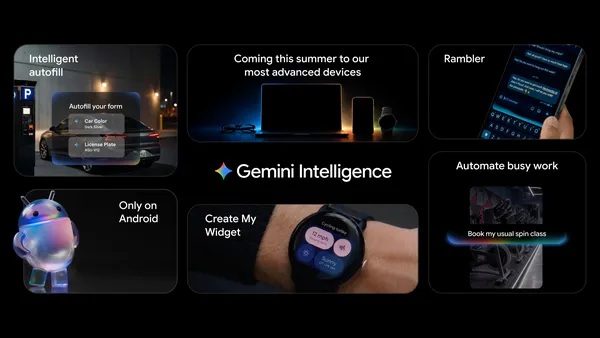
A smarter, more proactive Android with Gemini Intelligence
At the Android Show 2026, we introduced Gemini Intelligence, proactive new AI features on Android.

5 ways Google Search can level up your thrift and vintage shopping
Uncover second-hand scores with AI tools in Google Search and Shopping.
14 call to action examples (+ how to write a call to action)
When I think of the best example of a call to action (CTA), I think of my dad, bellowing at me daily to get a job. Eventually, his CTA compelled me to become a productive member of society despite a lifelong belief that work is something to avoid unless absolutely necessary. (Look at me now, Dad!) Just as personal CTAs can lead to transformative life decisions, marketing CTAs have the potential to significantly impact user engagement and conversion. Here, I'll share 14 call to action examples,
The 7 best PPM software tools in 2026
For those who have never experienced the unique joy of watching a multi-million-dollar project implode because your cubicle mate "didn't get the notification" about a task reassignment, project portfolio management (PPM) software might sound like just another boring business tool. But for anyone who's ever tried to coordinate 15 projects, four executive priorities, and a team of collaborators who treat deadlines like polite suggestions, PPM is life support. I spent weeks researching various PPM
Our views on AI policy and political advocacy
Our approach to AI policy and political advocacy, transparency, support for thoughtful regulation and AI safety, and that no outside political group speaks on the company’s behalf.
How Endava is redesigning software delivery around AI agents
Learn how Endava is using AI agents, ChatGPT Enterprise, and Codex to accelerate software delivery, automate workflows, and build an AI-native culture across the enterprise.

Biodefense in the Intelligence Age
An action plan for AI-powered biological resilience
AI May Soon Help You Understand What Your Pet Is Trying to Say
Chinese tech powerhouse Baidu has filed a patent for a system that could use AI to decode animal sounds and behaviour then translate those signals into human language. For the millions of pet owners wondering what their animals are thinking, this could be the first real step toward bridging the communication gap between humans and animals. The tech Baidu’s system would collect animal vocalizations, body movements, and biological signals. It would merge that data and feed it into an AI model trained to identify emotional states. These emotional states could then be rendered in human language to boost “cross-species communication”. The post AI May Soon Help You Understand What Your Pet Is Trying to Say appeared first on DailyAI.
Best Universities To Study AI in 2026
Artificial intelligence has made enormous strides in the past few years – with the introduction of a wide range of AI tools changing the landscape of how we assess data and operate within online spaces forever. This page ranks the 50 best universities to study AI around the world, based on scope, prestige, and the level of AI-related research each institution has released. Career prospects in AI There is a huge demand for individuals with a high degree of skills in artificial intelligence and machine learning, making AI a potential lucrative career prospect with countless opportunities as AI continues to The post Best Universities To Study AI in 2026 appeared first on DailyAI.

I/O 2026: Welcome to the agentic Gemini era
The latest from Google I/O: See how we’re helping you get more done with Gemini.
Opinion | It’s No Wonder Grads Are Booing Their Commencement Speakers - The New York Times
Opinion | It’s No Wonder Grads Are Booing Their Commencement Speakers The New York Times
Trump to meet with artificial intelligence companies on government profit share plan as soon as next week - Yahoo Finance
Trump to meet with artificial intelligence companies on government profit share plan as soon as next week Yahoo Finance
Codex is becoming a productivity tool for everyone
The Next Era of Knowledge Work report explores how Codex is transforming productivity through AI-powered research, data analysis, workflow automation, and content creation.
Zapier vs. n8n comparison: Which is best for your organization? [2026]
I'm the kind of person who likes saving money with DIY hacks. I've built a standing desk, buzzed my own hair, and biked to work through the woods to save on gas. Once, when my car's sunroof was leaking and none of my attempts to fix it worked, I decided to cover it with packaging tape instead of going to the mechanic. (It stayed that way for years.) Now that you have that context, you probably think I'd be the perfect candidate to run my own automation infrastructure. Right? Wrong. Broken workfl
The latest AI news we announced in May 2026
Here are Google’s latest AI updates from May 2026

Everything new in our Google AI subscriptions, fresh from I/O 2026
Introducing a $100 AI Ultra plan — plus, new features and benefits for Google AI Plus, Pro and Ultra subscribers.
Building the infrastructure for the Intelligence Age in Michigan
OpenAI breaks ground on a 1GW data center project in Michigan as part of Stargate, building AI infrastructure to expand access, create jobs, and support communities.

Railway secures $100 million to challenge AWS with AI-native cloud infrastructure
Railway, a San Francisco-based cloud platform that has quietly amassed two million developers without spending a dollar on marketing, announced Thursday that it raised $100 million in a Series B funding round, as surging demand for artificial intelligence applications exposes the limitations of legacy cloud infrastructure. TQ Ventures led the round, with participation from FPV Ventures, Redpoint, and Unusual Ventures. The investment values Railway as one of the most significant infrastructure startups to emerge during the AI boom, capitalizing on developer frustration with the complexity and cost of traditional platforms like Amazon Web Services and Google Cloud. "As AI models get better at writing code, more and more people are asking the age-old question: where, and how, do I run my applications?" said Jake Cooper, Railway's 28-year-old founder and chief executive, in an exclusive interview with VentureBeat. "The last generation of cloud primitives were slow and outdated, and now with AI moving everything faster, teams simply can't keep up." The funding is a dramatic acceleration for a company that has charted an unconventional path through the cloud computing industry. Railway raised just $24 million in total before this round, including a $20 million Series A from Redpoint in 2022. The company now processes more than 10 million deployments monthly and handles over one trillion requests through its edge network — metrics that rival far larger and better-funded competitors. Why three-minute deploy times have become unacceptable in the age of AI coding assistants Railway's pitch rests on a simple observation: the tools developers use to deploy and manage software were designed for a slower era. A standard build-and-deploy cycle using Terraform, the industry-standard infrastructure tool, takes two to three minutes. That delay, once tolerable, has become a critical bottleneck as AI coding assistants like Claude, ChatGPT, and Cursor can generate working code in seconds. "When godly intelligence is on tap and can solve any problem in three seconds, those amalgamations of systems become bottlenecks," Cooper told VentureBeat. "What was really cool for humans to deploy in 10 seconds or less is now table stakes for agents." The company claims its platform delivers deployments in under one second — fast enough to keep pace with AI-generated code. Customers report a tenfold increase in developer velocity and up to 65 percent cost savings compared to traditional cloud providers. These numbers come directly from enterprise clients, not internal benchmarks. Daniel Lobaton, chief technology officer at G2X, a platform serving 100,000 federal contractors, measured deployment speed improvements of seven times faster and an 87 percent cost reduction after migrating to Railway. His infrastructure bill dropped from $15,000 per month to approximately $1,000. "The work that used to take me a week on our previous infrastructure, I can do in Railway in like a day," Lobaton said. "If I want to spin up a new service and test different architectures, it would take so long on our old setup. In Railway I can launch six services in two minutes." Inside the controversial decision to abandon Google Cloud and build data centers from scratch What distinguishes Railway from competitors like Render and Fly.io is the depth of its vertical integration. In 2024, the company made the unusual decision to abandon Google Cloud entirely and build its own data centers, a move that echoes the famous Alan Kay maxim: "People who are really serious about software should make their own hardware." "We wanted to design hardware in a way where we could build a differentiated experience," Cooper said. "Having full control over the network, compute, and storage layers lets us do really fast build and deploy loops, the kind that allows us to move at 'agentic speed' while staying 100 percent the smoothest ride in town." The approach paid dividends during recent widespread outages that affected major cloud providers — Railway remained online throughout. This soup-to-nuts control enables pricing that undercuts the hyperscalers by roughly 50 percent and newer cloud startups by three to four times. Railway charges by the second for actual compute usage: $0.00000386 per gigabyte-second of memory, $0.00000772 per vCPU-second, and $0.00000006 per gigabyte-second of storage. There are no charges for idle virtual machines — a stark contrast to the traditional cloud model where customers pay for provisioned capacity whether they use it or not. "The conventional wisdom is that the big guys have economies of scale to offer better pricing," Cooper noted. "But when they're charging for VMs that usually sit idle in the cloud, and we've purpose-built everything to fit much more density on these machines, you have a big opportunity." How 30 employees built a platform generating tens of millions in annual revenue Railway has achieved its scale with a team of just 30 employees generating tens of millions in annual revenue — a ratio of revenue per employee that would be exceptional even for established software companies. The company grew revenue 3.5 times last year and continues to expand at 15 percent month-over-month. Cooper emphasized that the fundraise was strategic rather than necessary. "We're default alive; there's no reason for us to raise money," he said. "We raised because we see a massive opportunity to accelerate, not because we needed to survive." The company hired its first salesperson only last year and employs just two solutions engineers. Nearly all of Railway's two million users discovered the platform through word of mouth — developers telling other developers about a tool that actually works. "We basically did the standard engineering thing: if you build it, they will come," Cooper recalled. "And to some degree, they came." From side projects to Fortune 500 deployments: Railway's unlikely corporate expansion Despite its grassroots developer community, Railway has made significant inroads into large organizations. The company claims that 31 percent of Fortune 500 companies now use its platform, though deployments range from company-wide infrastructure to individual team projects. Notable customers include Bilt, the loyalty program company; Intuit's GoCo subsidiary; TripAdvisor's Cruise Critic; and MGM Resorts. Kernel, a Y Combinator-backed startup providing AI infrastructure to over 1,000 companies, runs its entire customer-facing system on Railway for $444 per month. "At my previous company Clever, which sold for $500 million, I had six full-time engineers just managing AWS," said Rafael Garcia, Kernel's chief technology officer. "Now I have six engineers total, and they all focus on product. Railway is exactly the tool I wish I had in 2012." For enterprise customers, Railway offers security certifications including SOC 2 Type 2 compliance and HIPAA readiness, with business associate agreements available upon request. The platform provides single sign-on authentication, comprehensive audit logs, and the option to deploy within a customer's existing cloud environment through a "bring your own cloud" configuration. Enterprise pricing starts at custom levels, with specific add-ons for extended log retention ($200 monthly), HIPAA BAAs ($1,000), enterprise support with SLOs ($2,000), and dedicated virtual machines ($10,000). The startup's bold strategy to take on Amazon, Google, and a new generation of cloud rivals Railway enters a crowded market that includes not only the hyperscale cloud providers—Amazon Web Services, Microsoft Azure, and Google Cloud Platform—but also a growing cohort of developer-focused platforms like Vercel, Render, Fly.io, and Heroku. Cooper argues that Railway's competitors fall into two camps, neither of which has fully committed to the new infrastructure model that AI demands. "The hyperscalers have two competing systems, and they haven't gone all-in on the new model because their legacy revenue stream is still printing money," he observed. "They have this mammoth pool of cash coming from people who provision a VM, use maybe 10 percent of it, and still pay for the whole thing. To what end are they actually interested in going all the way in on a new experience if they don't really need to?" Against startup competitors, Railway differentiates by covering the full infrastructure stack. "We're not just containers; we've got VM primitives, stateful storage, virtual private networking, automated load balancing," Cooper said. "And we wrap all of this in an absurdly easy-to-use UI, with agentic primitives so agents can move 1,000 times faster." The platform supports databases including PostgreSQL, MySQL, MongoDB, and Redis; provides up to 256 terabytes of persistent storage with over 100,000 input/output operations per second; and enables deployment to four global regions spanning the United States, Europe, and Southeast Asia. Enterprise customers can scale to 112 vCPUs and 2 terabytes of RAM per service. Why investors are betting that AI will create a thousand times more software than exists today Railway's fundraise reflects broader investor enthusiasm for companies positioned to benefit from the AI coding revolution. As tools like GitHub Copilot, Cursor, and Claude become standard fixtures in developer workflows, the volume of code being written — and the infrastructure needed to run it — is expanding dramatically. "The amount of software that's going to come online over the next five years is unfathomable compared to what existed before — we're talking a thousand times more software," Cooper predicted. "All of that has to run somewhere." The company has already integrated directly with AI systems, building what Cooper calls "loops where Claude can hook in, call deployments, and analyze infrastructure automatically." Railway released a Model Context Protocol server in August 2025 that allows AI coding agents to deploy applications and manage infrastructure directly from code editors. "The notion of a developer is melting before our eyes," Cooper said. "You don't have to be an engineer to engineer things anymore — you just need critical thinking and the ability to analyze things in a systems capacity." What Railway plans to do with $100 million and zero marketing experience Railway plans to use the new capital to expand its global data center footprint, grow its team beyond 30 employees, and build what Cooper described as a proper go-to-market operation for the first time in the company's five-year history. "One of my mentors said you raise money when you can change the trajectory of the business," Cooper explained. "We've built all the required substrate to scale indefinitely; what's been holding us back is simply talking about it. 2026 is the year we play on the world stage." The company's investor roster reads like a who's who of developer infrastructure. Angel investors include Tom Preston-Werner, co-founder of GitHub; Guillermo Rauch, chief executive of Vercel; Spencer Kimball, chief executive of Cockroach Labs; Olivier Pomel, chief executive of Datadog; and Jori Lallo, co-founder of Linear. The timing of Railway's expansion coincides with what many in Silicon Valley view as a fundamental shift in how software gets made. Coding assistants are no longer experimental curiosities — they have become essential tools that millions of developers rely on daily. Each line of AI-generated code needs somewhere to run, and the incumbents, by Cooper's telling, are too wedded to their existing business models to fully capitalize on the moment. Whether Railway can translate developer enthusiasm into sustained enterprise adoption remains an open question. The cloud infrastructure market is littered with promising startups that failed to break the grip of Amazon, Microsoft, and Google. But Cooper, who previously worked as a software engineer at Wolfram Alpha, Bloomberg, and Uber before founding Railway in 2020, seems unfazed by the scale of his ambition. "In five years, Railway [will be] the place where software gets created and evolved, period," he said. "Deploy instantly, scale infinitely, with zero friction. That's the prize worth playing for, and there's no bigger one on offer." For a company that built a $100 million business by doing the opposite of what conventional startup wisdom dictates — no marketing, no sales team, no venture hype—the real test begins now. Railway spent five years proving that developers would find a better mousetrap on their own. The next five will determine whether the rest of the world is ready to get on board.

Gemini 3.5: frontier intelligence with action
At Google I/O we released Gemini 3.5, our latest series of models combining frontier intelligence with action.
Is Silicon Valley ready to put robots in people’s homes? Hello Robot is.
The California startup released the fourth-generation of its home assistance robot, Stretch.
Zapier Formatter: Automatically format text the way you want
So near, and yet so far. That's the feeling more often than not when trying to get apps to work together. You export data out of one app, try to import it into another—and it looks perfect, right until it doesn't. Turns out, the text is in the wrong format or order, names are together when they should be split into first and last, dates and phone numbers are formatted incorrectly, and so on. Back to the drawing board. You could manually edit everything, splitting first and last names by hand or
A blueprint for democratic governance of frontier AI
OpenAI outlines a blueprint for U.S. governance of frontier AI, proposing a federal framework for safety, resilience, and national security.

Claude Code costs up to $200 a month. Goose does the same thing for free.
The artificial intelligence coding revolution comes with a catch: it's expensive. Claude Code, Anthropic's terminal-based AI agent that can write, debug, and deploy code autonomously, has captured the imagination of software developers worldwide. But its pricing — ranging from $20 to $200 per month depending on usage — has sparked a growing rebellion among the very programmers it aims to serve. Now, a free alternative is gaining traction. Goose, an open-source AI agent developed by Block (the financial technology company formerly known as Square), offers nearly identical functionality to Claude Code but runs entirely on a user's local machine. No subscription fees. No cloud dependency. No rate limits that reset every five hours. "Your data stays with you, period," said Parth Sareen, a software engineer who demonstrated the tool during a recent livestream. The comment captures the core appeal: Goose gives developers complete control over their AI-powered workflow, including the ability to work offline — even on an airplane. The project has exploded in popularity. Goose now boasts more than 26,100 stars on GitHub, the code-sharing platform, with 362 contributors and 102 releases since its launch. The latest version, 1.20.1, shipped on January 19, 2026, reflecting a development pace that rivals commercial products. For developers frustrated by Claude Code's pricing structure and usage caps, Goose represents something increasingly rare in the AI industry: a genuinely free, no-strings-attached option for serious work. Anthropic's new rate limits spark a developer revolt To understand why Goose matters, you need to understand the Claude Code pricing controversy. Anthropic, the San Francisco artificial intelligence company founded by former OpenAI executives, offers Claude Code as part of its subscription tiers. The free plan provides no access whatsoever. The Pro plan, at $17 per month with annual billing (or $20 monthly), limits users to just 10 to 40 prompts every five hours — a constraint that serious developers exhaust within minutes of intensive work. The Max plans, at $100 and $200 per month, offer more headroom: 50 to 200 prompts and 200 to 800 prompts respectively, plus access to Anthropic's most powerful model, Claude 4.5 Opus. But even these premium tiers come with restrictions that have inflamed the developer community. In late July, Anthropic announced new weekly rate limits. Under the system, Pro users receive 40 to 80 hours of Sonnet 4 usage per week. Max users at the $200 tier get 240 to 480 hours of Sonnet 4, plus 24 to 40 hours of Opus 4. Nearly five months later, the frustration has not subsided. The problem? Those "hours" are not actual hours. They represent token-based limits that vary wildly depending on codebase size, conversation length, and the complexity of the code being processed. Independent analysis suggests the actual per-session limits translate to roughly 44,000 tokens for Pro users and 220,000 tokens for the $200 Max plan. "It's confusing and vague," one developer wrote in a widely shared analysis. "When they say '24-40 hours of Opus 4,' that doesn't really tell you anything useful about what you're actually getting." The backlash on Reddit and developer forums has been fierce. Some users report hitting their daily limits within 30 minutes of intensive coding. Others have canceled their subscriptions entirely, calling the new restrictions "a joke" and "unusable for real work." Anthropic has defended the changes, stating that the limits affect fewer than five percent of users and target people running Claude Code "continuously in the background, 24/7." But the company has not clarified whether that figure refers to five percent of Max subscribers or five percent of all users — a distinction that matters enormously. How Block built a free AI coding agent that works offline Goose takes a radically different approach to the same problem. Built by Block, the payments company led by Jack Dorsey, Goose is what engineers call an "on-machine AI agent." Unlike Claude Code, which sends your queries to Anthropic's servers for processing, Goose can run entirely on your local computer using open-source language models that you download and control yourself. The project's documentation describes it as going "beyond code suggestions" to "install, execute, edit, and test with any LLM." That last phrase — "any LLM" — is the key differentiator. Goose is model-agnostic by design. You can connect Goose to Anthropic's Claude models if you have API access. You can use OpenAI's GPT-5 or Google's Gemini. You can route it through services like Groq or OpenRouter. Or — and this is where things get interesting — you can run it entirely locally using tools like Ollama, which let you download and execute open-source models on your own hardware. The practical implications are significant. With a local setup, there are no subscription fees, no usage caps, no rate limits, and no concerns about your code being sent to external servers. Your conversations with the AI never leave your machine. "I use Ollama all the time on planes — it's a lot of fun!" Sareen noted during a demonstration, highlighting how local models free developers from the constraints of internet connectivity. What Goose can do that traditional code assistants can't Goose operates as a command-line tool or desktop application that can autonomously perform complex development tasks. It can build entire projects from scratch, write and execute code, debug failures, orchestrate workflows across multiple files, and interact with external APIs — all without constant human oversight. The architecture relies on what the AI industry calls "tool calling" or "function calling" — the ability for a language model to request specific actions from external systems. When you ask Goose to create a new file, run a test suite, or check the status of a GitHub pull request, it doesn't just generate text describing what should happen. It actually executes those operations. This capability depends heavily on the underlying language model. Claude 4 models from Anthropic currently perform best at tool calling, according to the Berkeley Function-Calling Leaderboard, which ranks models on their ability to translate natural language requests into executable code and system commands. But newer open-source models are catching up quickly. Goose's documentation highlights several options with strong tool-calling support: Meta's Llama series, Alibaba's Qwen models, Google's Gemma variants, and DeepSeek's reasoning-focused architectures. The tool also integrates with the Model Context Protocol, or MCP, an emerging standard for connecting AI agents to external services. Through MCP, Goose can access databases, search engines, file systems, and third-party APIs — extending its capabilities far beyond what the base language model provides. Setting Up Goose with a Local Model For developers interested in a completely free, privacy-preserving setup, the process involves three main components: Goose itself, Ollama (a tool for running open-source models locally), and a compatible language model. Step 1: Install Ollama Ollama is an open-source project that dramatically simplifies the process of running large language models on personal hardware. It handles the complex work of downloading, optimizing, and serving models through a simple interface. Download and install Ollama from ollama.com. Once installed, you can pull models with a single command. For coding tasks, Qwen 2.5 offers strong tool-calling support: ollama run qwen2.5 The model downloads automatically and begins running on your machine. Step 2: Install Goose Goose is available as both a desktop application and a command-line interface. The desktop version provides a more visual experience, while the CLI appeals to developers who prefer working entirely in the terminal. Installation instructions vary by operating system but generally involve downloading from Goose's GitHub releases page or using a package manager. Block provides pre-built binaries for macOS (both Intel and Apple Silicon), Windows, and Linux. Step 3: Configure the Connection In Goose Desktop, navigate to Settings, then Configure Provider, and select Ollama. Confirm that the API Host is set to http://localhost:11434 (Ollama's default port) and click Submit. For the command-line version, run goose configure, select "Configure Providers," choose Ollama, and enter the model name when prompted. That's it. Goose is now connected to a language model running entirely on your hardware, ready to execute complex coding tasks without any subscription fees or external dependencies. The RAM, processing power, and trade-offs you should know about The obvious question: what kind of computer do you need? Running large language models locally requires substantially more computational resources than typical software. The key constraint is memory — specifically, RAM on most systems, or VRAM if using a dedicated graphics card for acceleration. Block's documentation suggests that 32 gigabytes of RAM provides "a solid baseline for larger models and outputs." For Mac users, this means the computer's unified memory is the primary bottleneck. For Windows and Linux users with discrete NVIDIA graphics cards, GPU memory (VRAM) matters more for acceleration. But you don't necessarily need expensive hardware to get started. Smaller models with fewer parameters run on much more modest systems. Qwen 2.5, for instance, comes in multiple sizes, and the smaller variants can operate effectively on machines with 16 gigabytes of RAM. "You don't need to run the largest models to get excellent results," Sareen emphasized. The practical recommendation: start with a smaller model to test your workflow, then scale up as needed. For context, Apple's entry-level MacBook Air with 8 gigabytes of RAM would struggle with most capable coding models. But a MacBook Pro with 32 gigabytes — increasingly common among professional developers — handles them comfortably. Why keeping your code off the cloud matters more than ever Goose with a local LLM is not a perfect substitute for Claude Code. The comparison involves real trade-offs that developers should understand. Model Quality: Claude 4.5 Opus, Anthropic's flagship model, remains arguably the most capable AI for software engineering tasks. It excels at understanding complex codebases, following nuanced instructions, and producing high-quality code on the first attempt. Open-source models have improved dramatically, but a gap persists — particularly for the most challenging tasks. One developer who switched to the $200 Claude Code plan described the difference bluntly: "When I say 'make this look modern,' Opus knows what I mean. Other models give me Bootstrap circa 2015." Context Window: Claude Sonnet 4.5, accessible through the API, offers a massive one-million-token context window — enough to load entire large codebases without chunking or context management issues. Most local models are limited to 4,096 or 8,192 tokens by default, though many can be configured for longer contexts at the cost of increased memory usage and slower processing. Speed: Cloud-based services like Claude Code run on dedicated server hardware optimized for AI inference. Local models, running on consumer laptops, typically process requests more slowly. The difference matters for iterative workflows where you're making rapid changes and waiting for AI feedback. Tooling Maturity: Claude Code benefits from Anthropic's dedicated engineering resources. Features like prompt caching (which can reduce costs by up to 90 percent for repeated contexts) and structured outputs are polished and well-documented. Goose, while actively developed with 102 releases to date, relies on community contributions and may lack equivalent refinement in specific areas. How Goose stacks up against Cursor, GitHub Copilot, and the paid AI coding market Goose enters a crowded market of AI coding tools, but occupies a distinctive position. Cursor, a popular AI-enhanced code editor, charges $20 per month for its Pro tier and $200 for Ultra—pricing that mirrors Claude Code's Max plans. Cursor provides approximately 4,500 Sonnet 4 requests per month at the Ultra level, a substantially different allocation model than Claude Code's hourly resets. Cline, Roo Code, and similar open-source projects offer AI coding assistance but with varying levels of autonomy and tool integration. Many focus on code completion rather than the agentic task execution that defines Goose and Claude Code. Amazon's CodeWhisperer, GitHub Copilot, and enterprise offerings from major cloud providers target large organizations with complex procurement processes and dedicated budgets. They are less relevant to individual developers and small teams seeking lightweight, flexible tools. Goose's combination of genuine autonomy, model agnosticism, local operation, and zero cost creates a unique value proposition. The tool is not trying to compete with commercial offerings on polish or model quality. It's competing on freedom — both financial and architectural. The $200-a-month era for AI coding tools may be ending The AI coding tools market is evolving quickly. Open-source models are improving at a pace that continually narrows the gap with proprietary alternatives. Moonshot AI's Kimi K2 and z.ai's GLM 4.5 now benchmark near Claude Sonnet 4 levels — and they're freely available. If this trajectory continues, the quality advantage that justifies Claude Code's premium pricing may erode. Anthropic would then face pressure to compete on features, user experience, and integration rather than raw model capability. For now, developers face a clear choice. Those who need the absolute best model quality, who can afford premium pricing, and who accept usage restrictions may prefer Claude Code. Those who prioritize cost, privacy, offline access, and flexibility have a genuine alternative in Goose. The fact that a $200-per-month commercial product has a zero-dollar open-source competitor with comparable core functionality is itself remarkable. It reflects both the maturation of open-source AI infrastructure and the appetite among developers for tools that respect their autonomy. Goose is not perfect. It requires more technical setup than commercial alternatives. It depends on hardware resources that not every developer possesses. Its model options, while improving rapidly, still trail the best proprietary offerings on complex tasks. But for a growing community of developers, those limitations are acceptable trade-offs for something increasingly rare in the AI landscape: a tool that truly belongs to them. Goose is available for download at github.com/block/goose. Ollama is available at ollama.com. Both projects are free and open source.
I/O 2026
At Google I/O 2026, we shared how we’re making AI more helpful for everyone. See everything we announced.
Trump says his team will "look into" U.S. taking stake in AI companies - Reuters
Trump says his team will "look into" U.S. taking stake in AI companies Reuters

Gemini for Science: AI experiments and tools for a new era of discovery
Gemini for Science is a new collection of science tools and experiments to expand the scale and precision of scientific exploration.
Murder Victim Speaks from the Grave in Courtroom Through AI
Chris Pelkey was shot and killed in a road rage incident. At his killer’s sentencing, he forgave the man via AI. In a historic first for Arizona, and possibly the U.S., artificial intelligence was used in court to let a murder victim deliver his own victim impact statement. What happened Pelkey, a 37-year-old Army veteran, was gunned down at a red light in 2021. This month, a realistic AI version of him appeared in court to address his killer, Gabriel Horcasitas. “In another life, we probably could’ve been friends,” said AI Pelkey in the video. “I believe in forgiveness, and The post Murder Victim Speaks from the Grave in Courtroom Through AI appeared first on DailyAI.
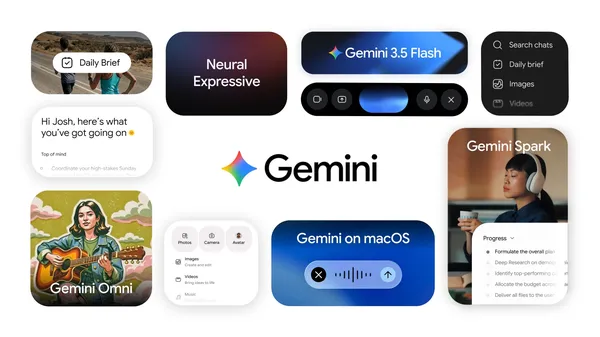
The Gemini app becomes more agentic, delivering proactive, 24/7 help
A look at how the Gemini app is becoming more agentic, delivering proactive, 24/7 help.
100 things we announced at I/O 2026
We've been busy! Here’s a rundown of the top announcements, launches and demos at I/O 2026.
The ‘together tech’ wave might be the most intriguing startup bet of 2026
While the AI fundraising machine keeps breaking its own records, some founders are building in the other direction. Mirror founder Brynn Putnam just raised money for Board, a startup focused on bringing people together through in-person games and social experiences. Cyberdeck creators are going viral crafting whimsical DIY computers that literally encourage users to touch grass. Unlike the AI-free browser crowd, this doesn’t just feel like backlash, […]
Wary of U.S., Carney Bets on AI Strategy for Canada - The New York Times
Wary of U.S., Carney Bets on AI Strategy for Canada The New York Times
Meta steals a tactic from Tesla and builds data centers in tents
Meta may have found one way to slash its massive data center bill: tents.
Anthropic calls for pause of global AI development - Yahoo
Anthropic calls for pause of global AI development Yahoo
The token bill comes due: Inside the industry scramble to manage AI’s runaway costs
"The whole conversation shifted from tokenmaxxing and 'go fast' to 'we need guardrails, how do we control this?'"
Ahead of its IPO, Anthropic’s Daniela Amodei shrugs off doubts about AI’s returns
Anthropic has been growing at a breakneck pace. The company announced that annualized revenue crossed $47 billion in May, up dramatically from roughly $9 billion at the end of 2025. That trajectory faces a real test, though.
14 popular ways to use Zapier to scale your work securely
Manual work might (eventually) get the job done, but it rarely scales. Whether it's following up with leads, sharing updates, or wrangling data across teams, as your processes grow more complex, so does the need for workflows that scale with you. That's where Zapier comes in. You can start by automating individual tasks with simple workflows—what we call Zap workflows—and grow into orchestrating entire systems across apps, teams, and data. With tools like Tables, Forms, Zapier MCP, and Zapier SD
The 6 best electronic signature apps to sign documents online in 2026
Paperwork is now more of an abstract concept than something that requires a printer, a few sheets of paper, and a pen. You don't have to physically sign a contract for it to be legally binding, but there are still a few hoops you have to jump through to make sure your electronic signature will count in court or be acceptable to other legal and regulatory bodies. Using a dedicated eSignature app to sign documents online is the best way to go if you want your digital signature to stand up to all t